GTD Reflection

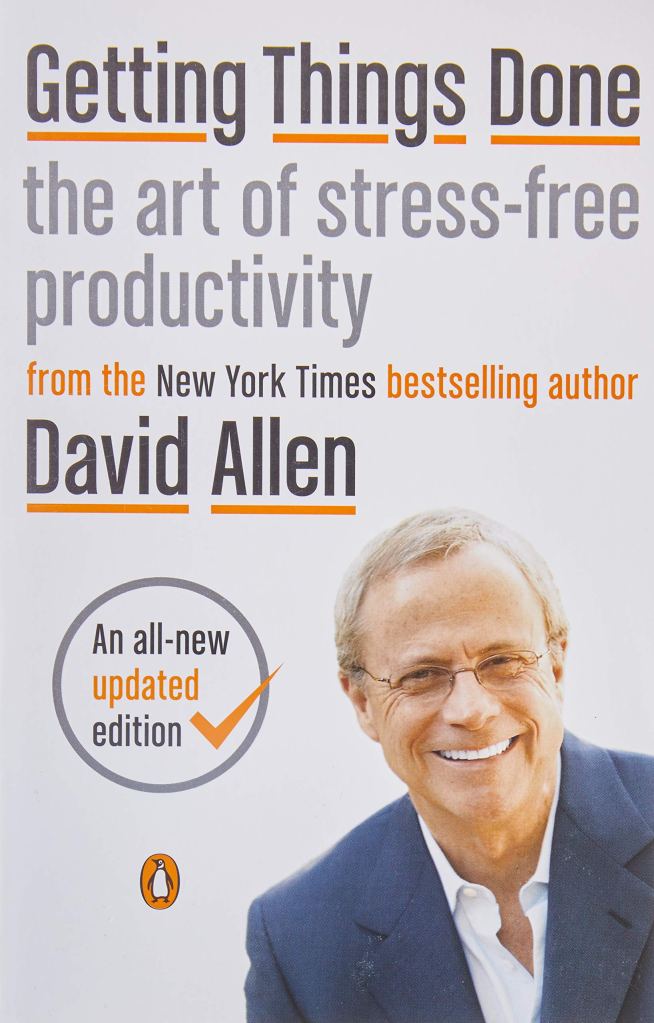
After reading David Allen’s book Getting Thing Done, I personally found the book to be a helpful source in organizing my everyday life. In my average day as a three sport D2 athlete, management major I found managing my work load to be a difficult task to handle at times. So often before reading this book I would try to remember all my tasks that needed to be done in a day in my head. In result I would forget important dates such as my families birthdays, special occasions, even when I had plans to spend time with friends. My whole life just revolved around what I could remember. I prioritized my day by what I thought that was a more pressing matter.

            After reading David Allen’s book I began to organize my buckets as they were a complete mess. I ended up deleting over 10,000 emails from 2012 to today. I have created folders in my inbox so that I can categorize emails. I have started using the not app on my phone to keep track things that I think about. I used Google calendar to keep track of all the tasks I have to complete each day and when special occasions are. I had empted my backpack and removed irrelevant papers that have been in my bag for the past 12 months.                  

This book not only reduced my stress of work in a frantic time to live, but also this book helped me manage all my to-dos. GTD has helped me “redefine the wheel” by helping me manage tasks, clearing irrelevant information, and helping me with the process of selecting. GTD has this open approach to workflows, which allows the book to reach everyone in all different stages of life. The book after I read it can relate to not only as a college senior looking for a job, but also as soon to be father, or a professional at the top of their game. I personally see a lot of value in reading GTD and you will be surprised the impact it has on your life.

Cartel Variant Strategy

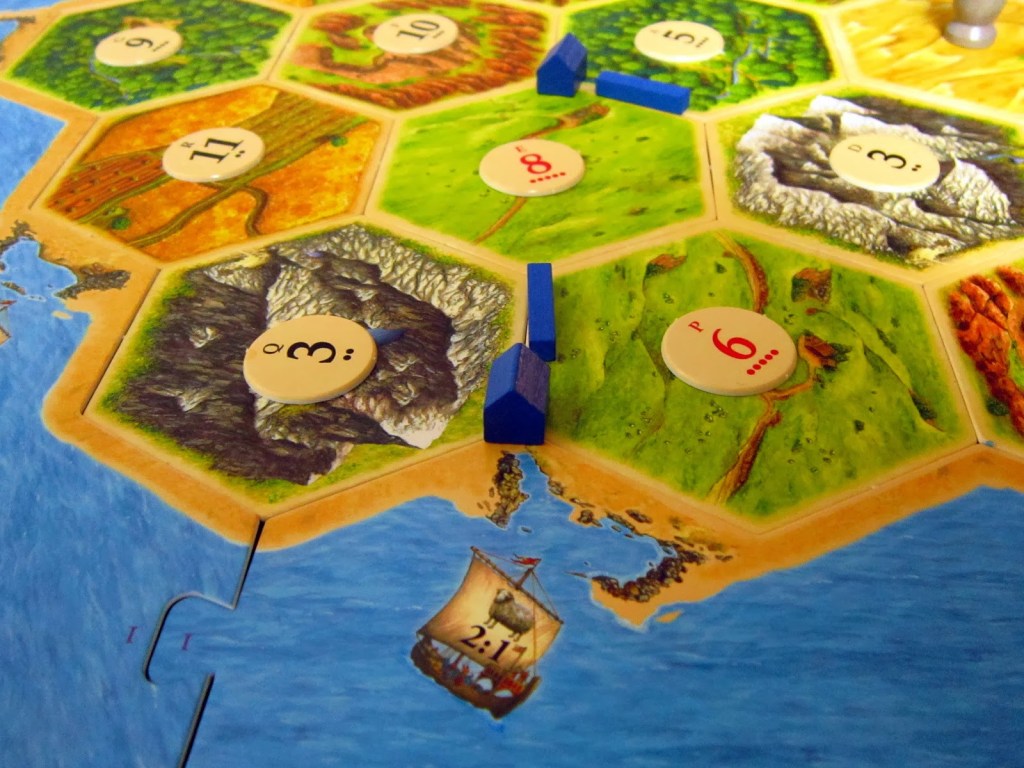
The Cartel Variant Strategy focuses on share control of a resource in order to reduce the chance of the robber being place on a title you need. If your settlements are sharing a tile with one or more player then it will decrease the chances of you being hit by the robber. This event is because it now gives you a 50% chance of you or the person you are sharing the tile with to get the robber and neither you nor the person you are sharing with will put the robber on the tile. The robber is placed mainly on the dominant player, so if you are in that position you want to also diversify your locations because if you are stuck to one location, and the robber is placed on your primary resource then you are basically shut out of the game until the robber is moved. If you diversify your settlements, it is impossible for other players to completely shut you out of the game. Also, focusing on the resources with little appeal to other players becomes more valuable as the game goes on especially if you have the corresponding port. For example, if I am pursuing a sheep in the beginning of the game and also place one settlement on a sheep port. In the end, when the sheep is rolled, you could maximize the port by trading resources at a discount rate and get more necessary resources.” Sheep and wheat are the resources that are targeted for this particular strategy. This event is because they are not targeted at the first placement of the game. In order to also prevail with this strategy one needs to obtain knights to make sure the robber doesn’t target you, and preferably on your opponents most valuable tiles or tiles that your opponent has a port.

The Rare Resource Strategy

The rare resource strategy requires you to examine the board to see which resource will be the hardest to get throughout the game. One should consider putting one of their settlements on the best tile for that specific resource. Having that supply of the rare resource will become more valuable throughout the game and you can trade that resource for whatever you need.

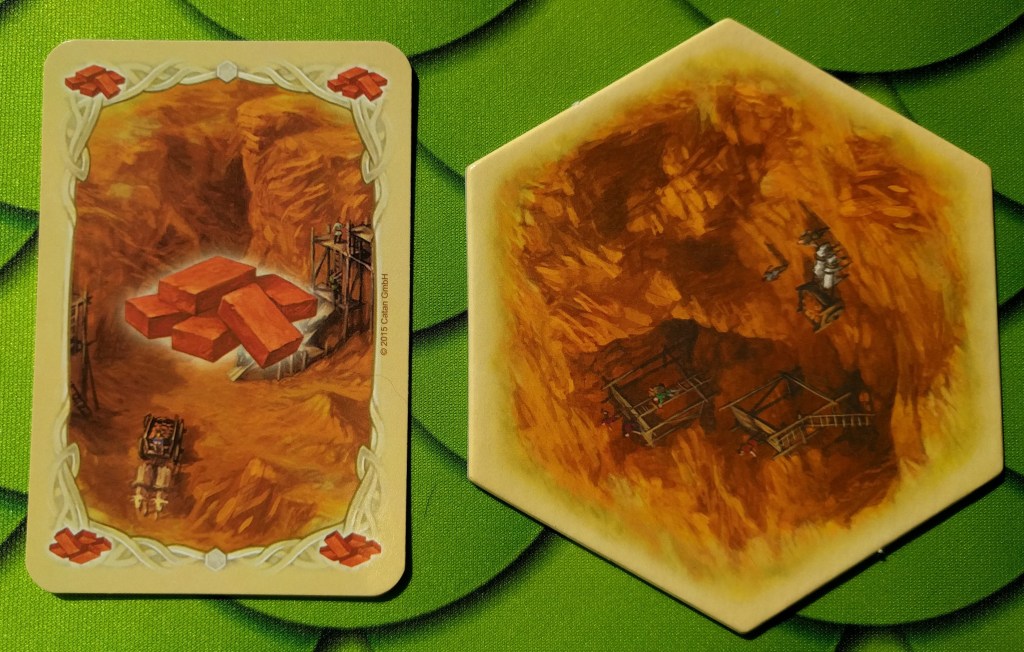
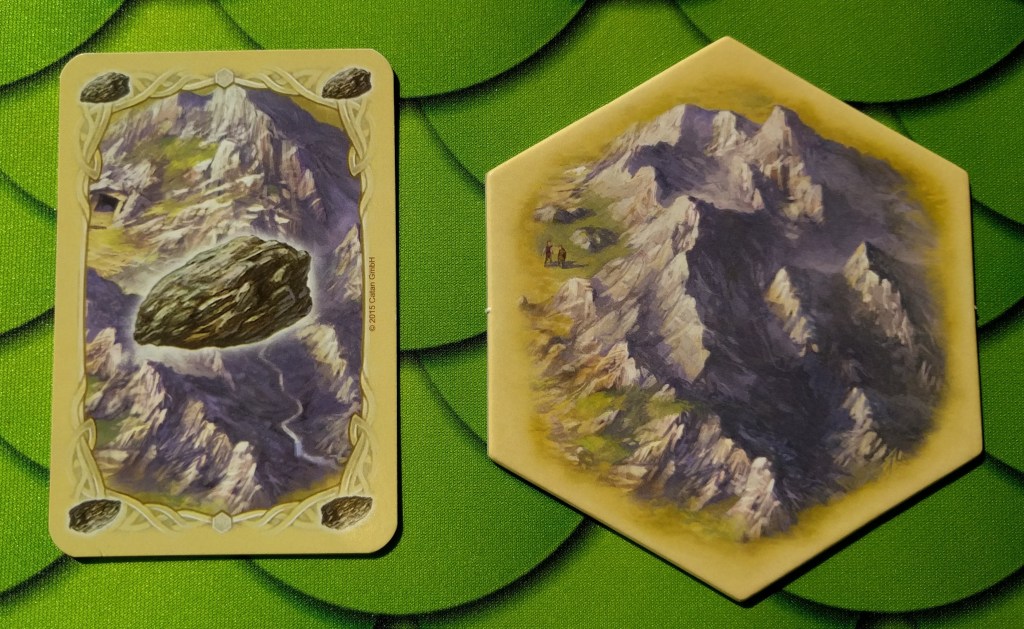
This strategy is all about identifying the rarest resource and making sure that you have access it. There are two ways that a resource can become rare in a game, one in that bad numbers are placed on the resource/bad production, and second in that rare availability. Rare availability may occur because ore and bricks are the only two resources with fewer than four tiles in a regular game. This event makes having a direct contact with either of those two resources significantly more valuable. Most of the time though both of these situations will occur, which increases the value of having a settlement connected to that particular resource.

 This strategy isn’t about monopolizing on the resource, but rather you want to share the tile with at least one other person to reduce the risk of being hit by the robber. You just want make sure that you have access to that resource. The only way that using the rare resource strategy works is if it is used along with another strategy. The key of this strategy is to just make sure that you have access to the particular resource, which will be in high demand.

The downside if you don’t use this strategy is that when the game gets going you will need to have these rare resources to continue expanding, building cities, or getting development cards.

Next Action Step

The next action for every project is important as it gives you direction on which ay to go and always keeps you looking for the next step. For myself, I personally resonate with this idea as I am a planner. I like to think about what needs to be done and how do I personally get to this point. Although when you plan for something almost always the project doesn’t go the exact way that you thought the project was going to go. This event can become overwhelming, which can lead to procrastination as stated in Getting Things Done.

I can resonate to the procrastination when times get tough as it is the easier to just push the project off then going after the project right away. For example when I heard that Roberts was going remote, I originally began to be excited about the idea of getting ahead on my school work, but after I got home and was unable to retrieve my files from the school computer, I immediately regretted not uploading everything online. These problems made me second guess myself and pushed me towards procrastination. As I thought more of the situation, I knew that I would need to push myself to getting my assignments done because if I didn’t know, then I would check out and not get my school work done.

One step that I use that was also mention in the book was defining the next action when working with others. I am currently working with a group of classmates on a project for strategic management. With defining the next action, it forces accountability and makes it easier to plan out the next task that needs to be accomplish. With the projects that I have to accomplish in that class the need of all my team members to work together is essential for the success of the team as a whole.

Think it, write it down

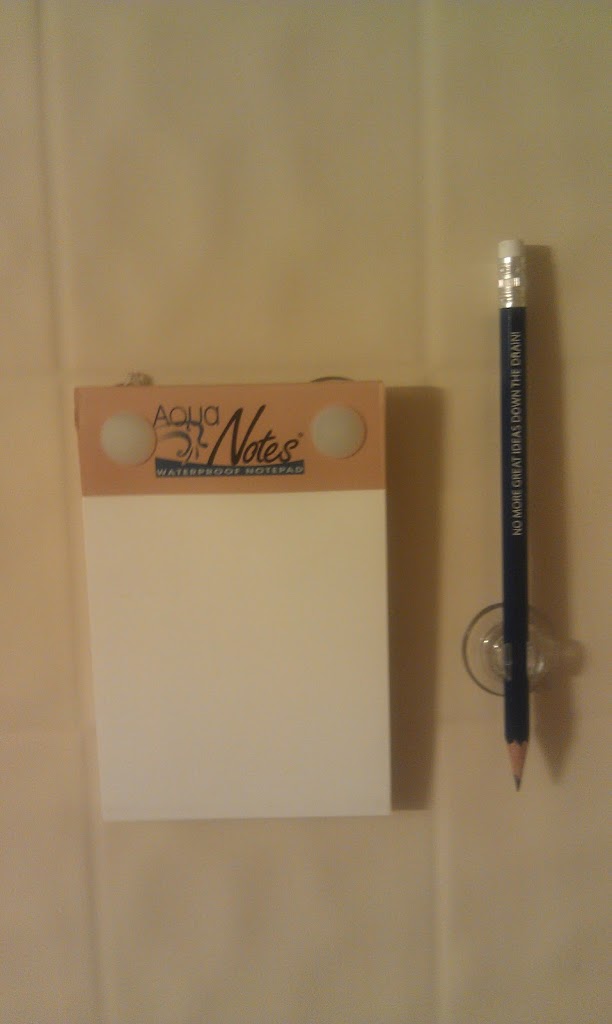
When working on a project, one needs to dedicate time and space in order for the planning process to be done. Each project will need a specific set of tools depending on the size of the project. These projects can range from building a house to completing your homework. Each project will require you to think. A way to decrease the strain on your mind is to writing down ideas and actions that need to be accomplished right away. This event is a great way to help lower the strain on your mind. When I take showers, I always use that time to think about future business ideas, or a conversation I had to have with someone, but I always forget what I was thinking about by the time I get out of the shower and dried off. This event always frustrates me as I forget what I was thinking about, but from reading Getting Things Done, I have kept my phone by me when I am taking a shower so that I can take notes on my ideas so that I won’t forget them. Before when I forgot my ideas I would constantly become overwhelmed as I would try so hard to remember what I was thinking about or if I needed to get a task done, it would loom over me until I remembered it. I couldn’t go to bed stressing about something, but ever since I started keeping my phone by the shower and taking notes I have also noticed my stress level going down as well as my ability to go to sleep at a reasonable time. I see this book as a way to not only be organize, but to also live a healthier lifestyle. My family has a history of high blood pressure, which is from stress, but as I follow this book’s guidelines I am starting to notice my stress level decreasing.

Six-Level Model

In the book Getting Things Done, the author talks about the six-level model, which describes the multiple levels of responsibility. The author uses the example about a plane preparing for landing on a runway and how to prioritize tasks. For this model, it requires you to do a bottom up approach when accomplishing those tasks. This event is because it is harder to accomplish the multiple step tasks first. All the tasks should be moving you to that lifetime goal. One needs to consistently move up the levels in order to reach their “life” goal.

The example of the plane landing on the runway is as followed:

  1. Life: 50’000 feet
  2. 3-5 years: 40’000 feet
  3. 1-2 years: 30’000 feet
  4. Areas of responsibility: 20’000 feet
  5. Current projects: 10’000 feet
  6. Current task: runway

A six-level model approach that I am currently using is with my career path. My life goal is to become a COO of a fortune 500 company, but there are many steps I need to go through first to get to that position. My current task is completing my blog posts for senior seminar, while the current task leads into my current project of getting my bachelor’s degree. The responsibility that I am faced with is getting a job after I graduate from Roberts Wesleyan College. In 1-2 years, I hope to get the certified as a project manager. In my 3-5 year approach, I hope to become a project manager and get the experience with operations. With me following these steps I hope to become a COO by the end of my professional career. There are no shortcuts that will getting myself  a position as a COO, but only through my work experience that will help me accomplish my goal. The bottom up approach is the only way to get to where you want to go successfully.  

Buckets

In David Allen’s book Getting things done, he identifies there are 7 types of buckets, project list, projects support material, next actions’ list, waiting for’ list, someday/maybe list, calendar, and reference material. The project list that I am faced with as of today is getting all of my school work done on time, while being remote. Nobody could have expected the impact corona-virus would have had on higher education. In result to the spread of the disease, I am now responsible to work remote, which brings up new problems and responsibilities. As each teacher is sending me all of my assignments throughout this week, my project list is becoming longer. I am keeping track of all my assignments by putting them in my notepad in my cell phone. The project support materials that I have are my laptop, my textbooks, my notebooks, my cell phone and my Bible. With all of these materials, I will be able to accomplish all of my tasks. In my next action list, I have organized blog posts for senior seminar. As I am trying to work ahead on some of my classes as Strategic Management is requiring me to raise money remote for Uganda Water Project. This project on my project list will take the most amounts of time and effort in order to get the funds needed. Also, with the spread of the coronavirus it makes it more difficult to get raise money as consumers are more reluctant to donate money due to the economic crisis we are in. On my waiting list, I am waiting on my team for the Uganda Water Project to update the go-fund me account. On the someday list, I have applying to jobs, as the market is struggling right now, and the school load that I have it has made it harder to find the time in the day to find a job. My calendar, I have all of the assignments that are time sensitive. My reference material as of right now is my teacher’s emails with due dates as the syllabuses are now outdated.

Bag Dump

Before opening my bag:

The thought of emptying my bag always intimidated me because I new that I shoved all my unwanted papers from my classes into my bag. My bag would have to be the container I use the most. I put all of my homework, quizzes, projects, notes, and school supplies in my bag. I use my bag so much because out of all my containers, my bag is my most mobile container. Out of my three containers, I would also say that my bag is the least organized. I usually shove all my papers in my bag without putting them in the appropriate folder. This event is because at times I become lazy at the end of classes when I receive feedback on my assignments, and don’t want to pull out the corresponding folder to put the paper away.

After opening my bag:

After I opened my bag, I noticed that I had papers wrinkled up at the bottom of the bag from the last semester. The contents of my bag included five notebooks, three textbooks, a kindle, two pens, and mechanical pencil, a CPR breathing mask and my bible. Throughout the last semester, I also kept miscellaneous papers in my notebooks and in my bag.

What I will do better:

In the past, I was lazy with putting all my papers away in the appropriate folder, but after this experience I have decided to keep track of where I am putting all my papers. If the paper has little importance, I will discard the paper, rather than just putting the paper in my bag. It is because I horded papers that they ended up wrinkled at the bottom of my bag. I have reorganized my bag as well, with removing notes that were from a prior semester, in order to keep my bag up to date.

The Wood-Brick Strategy

https://www.ultraboardgames.com/catan/gfx/wood.jpg

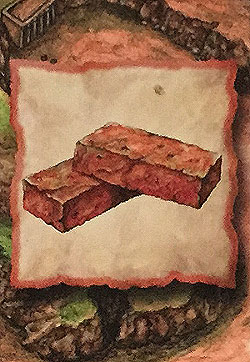
The wood-brick strategy purpose is to obtain as much wood and brick early in the game, in order to build settlements and roads faster than your opponents.

A wood/brick port is very useful with this strategy, as finding a way to get ore/grain will be important to build cities in the middle to end game.

There is skepticism with this strategy as it can be seen as less effective on a small or congested board, as you need room to grow in order for this strategy to pay off. This strategy is although most effective as it increases the number of roads you have will allow for more options to expand into locations with limited number of expansion spots. Also ore-grain player’s worst nightmare is playing on a congested board with one or two wood-brick players. This strategy naturally lends itself to getting the longest road. .

For this strategy, it is very important that you build new settlements around open grain and ore hexes, or you will have a very difficult time trying to build cities later on in the game, which can be crucial for to win the game.

https://www.ultraboardgames.com/catan/gfx/brick.jpg

Optionally, with your increased settlement production, you can build on a number of ports to get ore and wheat.

With your increased road building capability, you should build your roads to cut off other player’s expansion. This can help in denying Ore/Grain players from acquiring enough building sites they need to win the game. This leads into the next variant, which takes this to more of an extreme:

The constant expansion of roads at a fast pace is crucial to get the win, but there is a variety of ways to use the roads such as blocking off your opponents. Blocking off your opponents requires you to focus on building roads first rather than production. After you are done blocking off your opponents then you can focus on getting victory points.

This requires a lot of wood and brick, so your first cities should be on these, rather than ore. Trade aggressively for wood and brick, before it’s obvious you might be a threat.

This strategy is can be difficult to do as it goes against the philosophy of the game that requires the player to build up his/her production. It can work better on smaller boards with less people as it is easier to block off your opponents rather than a larger board with more opponents.

The Opportunity For Expansion & How to Priorities

Within the Expansion process one needs to be able to priorities which location to expand too. If one makes the wrong decision when expanding, it may cost the individual his/her game. It is important to keep in mind that the location you are expanding to is probably on another opponent’s radar as well.

Expansion opportunity priorities:
  1. Go for the spot with the most dots
  2. Increase diversity of resources you produce
  3. Try to get to a nearby port
One problem that many Catan players face when it comes to expansion is being cut off from future expansion. You need to be able to anticipate where your opponents are looking to expand to and prevent being cut off. In order to prevent being cut off, use roads to make sure to follow the expansion of your rivals and keep an eye on what they are building towards. In regards to placing settlements don’t just to try to interfere with others players, but rather think of which location will be most beneficial to yourself. If in the process of getting a solid settlement placement you interfere with another player in the process, then that is great because you hit 2 birds with 1 stone. When placing a settlement or a city keep in mind who else is on that location. You want to avoid being on a tile all by yourself because it opens you up to being attacked by the robber. If you share the tiles then you will be less likely to be hit with the robber as other players will be involved in that hex as well. The riskiest, but most rewarding option when expanding is to completely monopolize a hex (3 cities on 1 hex), this makes you a huge target for the robber, and you will need knights on hand to get the robber off that hex in case the robber lands on that hex. It is generally not the most recommend strategy to monopolizing hexes, because it results in huge swings in terms of the number of cards in your hand. If the robber is rolled then you risk losing cards and being shut down. One needs to keep themselves under the radar when they are using this strategy because if there is another player that is in the spot light it will prevent others from shutting you down. Personally I don’t recommend this strategy as it makes you an easy target and you are putting all your eggs in one basket rather than spreading them out.
Design a site like this with WordPress.com
Get started